This is an old revision of the document!
Table of Contents
- 红心 or 紅心, means red heart
Dong Ding Hongxin
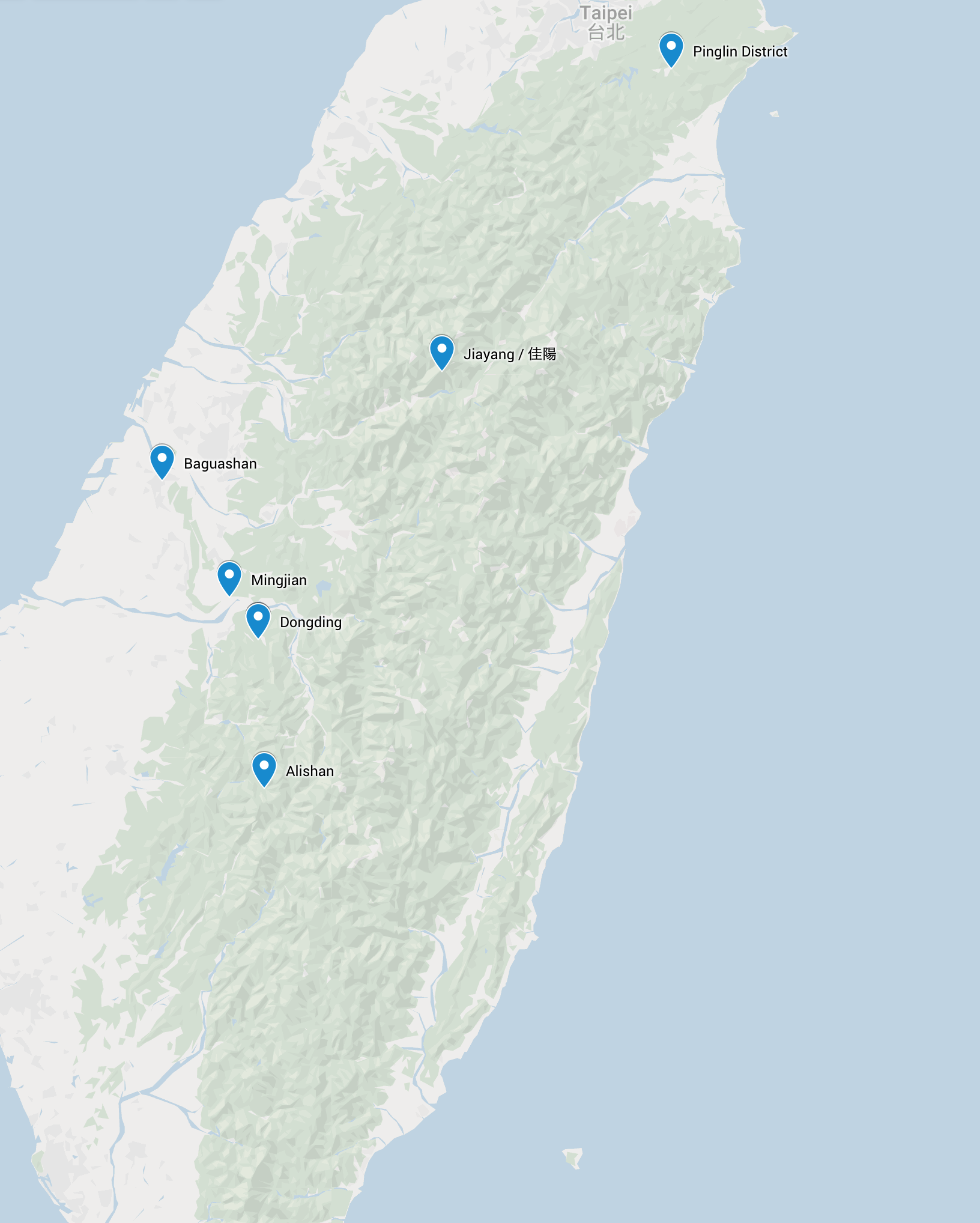
- Very big balls
- Western (compare to Wu Yi reference blend) (28 XI 18): Empty cup fascinating, almost rotten meat or sharp shit? Balsamic vinegar; same smell also on the leaves, and also on the nose. It's not bad, but fascinating. It's also in the mouth, leathery, slight sharp twist. Hardly any fruit, rather a fermented sweetness. As it cools down, leather and demure become more obvious. Very long presence, stretching out in the middle of the mouth towards the back.
- Subsequent Gong Fu Cha: It becomes milder, loses the sharpness.
- Maybe the sharpness is a fault, I couldn't find it in an other sample, but the other one I found plain boring.
- On 8 XII 18, we tasted two Hongxins from Dong Ding at Menglins: Autumn and Spring. I found autumn more sweet, filling the mouth completely, some leather in the back. Quite astringent / compact in later brews, when it's lost its sweetness. Spring harvest was more centered to the front, not as sweet; and more interesting. Both have a dark buckwheat honey note.
Yingzhi Hongxin (硬枝红心) 2003 Shimen, Taiwan
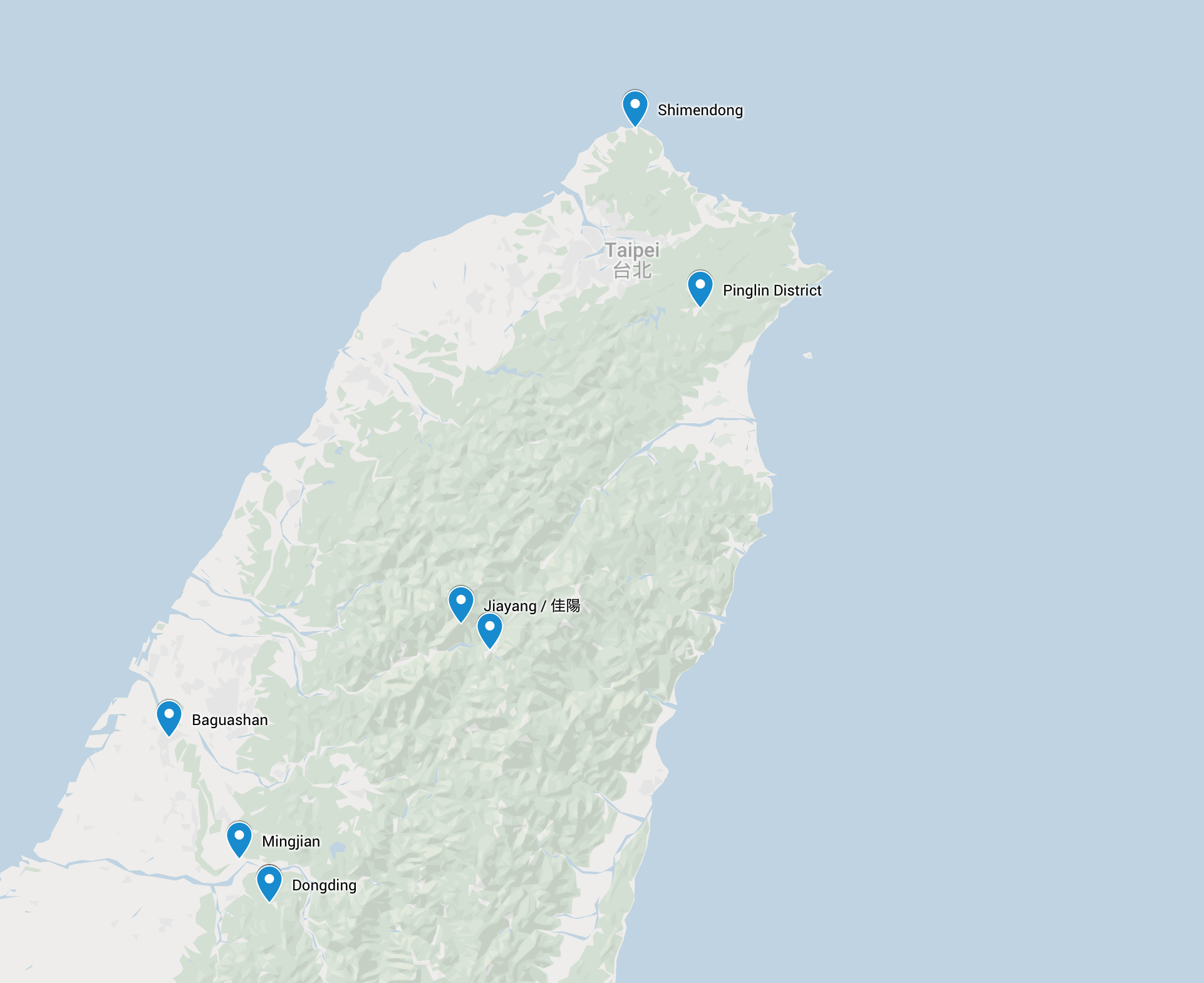
- It's a different cultivar! This one is *hard* Hongxin, that means the bark is woody rather than soft. It seems to only grow in Shimen. Jin Xuan und Cui Yu are cultivars derived from this one.
- Western (8 XII 18) (in comparison to Dong Ding Hongxin): Nose is less sweet still, stonier. Slightly chloride taste, not as sweet at all. I think it has some fruitiness, but a dry / dusty one, like guava or dragonfruit.
- While it is dark and complex, I'm not too fond of the chloride-ness.
- Others say almonds, underwood.
Yingzhi Hongxin Baozhong from Wenshan, Taiwan, 2017 Spring
- Close to Shimen, but not near the coast, a bit south of Taipei.
- Western (14 XII 18) (in comparison to Shimen Yingzhi Hongxin): Wet leaves and empty cup smell of nothing. Nose is vanilla and carrot stew, very light and sweet, a bit shallow, especially when compared to the roasted sweetness of the Shimen one. As it cools down, some greenery can be detected. Aroma is pleasant, light; a hint of chloride, metallic minerality, that is much more pronounced in the Shimen one. More vegetable brew as it chills.
- Western (25 XII 18) (comparing Buddha's Hand Shiding 09 to Yingzhi Hongxin Baozhong 17 and Dong Ding Wuyi 16): Green, vanillated leaves. Same vanillated note in empty cup. Extremely light colour; nose is green, akin to chestnut note in some green teas. Watery and slight vanilla in the mouth. Bland and unpleasant. So bad I tossed it away on 25 XII 18.