This is an old revision of the document!
Table of Contents
Qingxin
- Varietal Qingxin (青心) is the oldest and most famous in Taiwan. Smells like osmanthus and orchids. Original Dong Ding has to use this varietal. Große Vielseitigkeit, bluming-fruchtig.
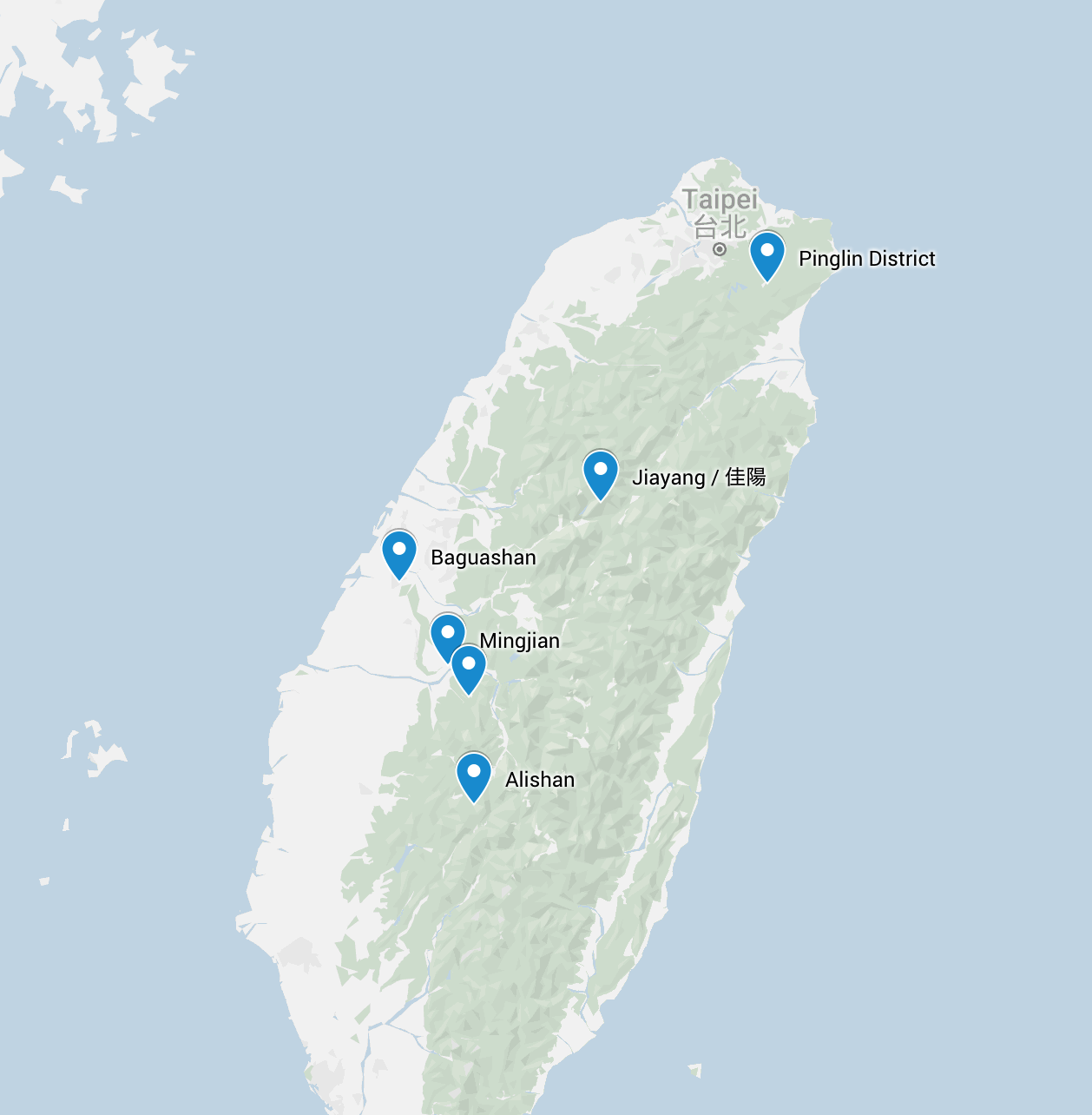
Alishan Tanbei (Jubiläumstee)
- Blind Western (30 I 20): roasted Qingxin? Light honey; cup lighter, heavy chloride though. Also some acidity, but to the front of the tongue. Thought it might be a gaoshan, but didn't guess this.
- Blind Western (1 II 20): nose quite tame, like the tea has lost most of its power. Residual fruitiness in the back; maybe some damp temple incense ash, too. Very calm actually. Cup also very calm, balanced actually, not boring. Very full, but not so much taste, more a strong mouthfeel. I actually think this is excellent. Could be Duck Shit. But I guessed wrong. This perfect balance, Zurückhaltung, it's quite fascinating! This time, not one bit of chloride.
- Blind Western (2 II 20): fruity, medium dark; a bit pine foresty und Harz. Cup similar, Harz, but no astringency, very round and dark honey finish. I thought it would be Song's Nantou Dark, so this idea of Zurückhaltung is very relative.
- Western (2 II 20): Nose medium dark, actually; and indeed some Harz. Maybe the tea indeed had to wake up? Honig, Pinienwald. Banana? Cup very rounded, good sweetness, honeyed, some red flowers? Very balanced, still; ah, and some salt!
- Western (2 II 20): Nose quite fresh accents in it's depth, greenery, too; ferns? Covered soon by sweetness; Lebkuchen. Very round and dense, sweetish, this time less Harz, but still leaves something on the tongue. Sweet greenery in the finish remains.
- Blind Western (3 II 20): beautifully full, fruity nose. Rounded, beautiful cup, too. Not too fruity, not too dry. Must be one of MLs QQs, Jubiläumstee or actually a mystery tea. It's perfect balance in it's fullness is the key.
Gukeng Jubiläumstee
- Western (2 II 20): Ah, very ML! Full, fruity, but not blatant. Ricola and apricot. Very full, mineralic! Sourness in the back, metal on the tip.
- Blind Western (2 II 20): Oolong nose, medium, slightly chloridic; supple, tame fruit. Hints of light shit. Quite mineralic body. Gukeng!
Alishan Qingxin Holzkohle (Winter 2009)
- Alishan (阿里山) makes this a high mountain oolong, 1350 metres. Climate is tropical, according to charen, these teas are the fiery latinos among the 'Swiss' fairytale high mountain oolongs such as Lishan.
- Western (in comparison with STs Qingxin) (XI 2018): Much larger leaves, obviously (winter harvest). Very sweet cup, plain vanilla big time, but also candle wax and aged balsamic. In the nose a lot less juicy, but instead old candle wax and cooked (but not vegetable broth as in other oolongs). Lots lots lots of stone fruit, peach kernels. Amazing tea, but very different from standard Qinxing. I think in the back I can make out the same cut flower stalk juiciness, but it's almost eclipsed by the strong fruitiness!
- Blind Western (23 I 19): elegant, restrained fruityness, dried apricots. Also big & bolt, but more fruity and less cookie sweet. Pleasantly fresh finish. As it cool down, it becomes a little bit boring. (Guessed Yinzi Hongxin)
- Blind Western (7 II 19): lighter, a bit of vanilla dough. greenery coming through; bouillon. Slight bitterness, carrots; good flow.
- Western (7 II 19): Vanilla, and tasty roast carrots. Roast aromas, big body, good density, and a fresh finish.
- Blind Western (1 IV 19): a little bit more meaty, but still elegant and floral. cup elegant yet present. woody, slightly sour. When it becomes cool, it is more apparent the succulence.
Cui Feng Dongpian Winter 2015
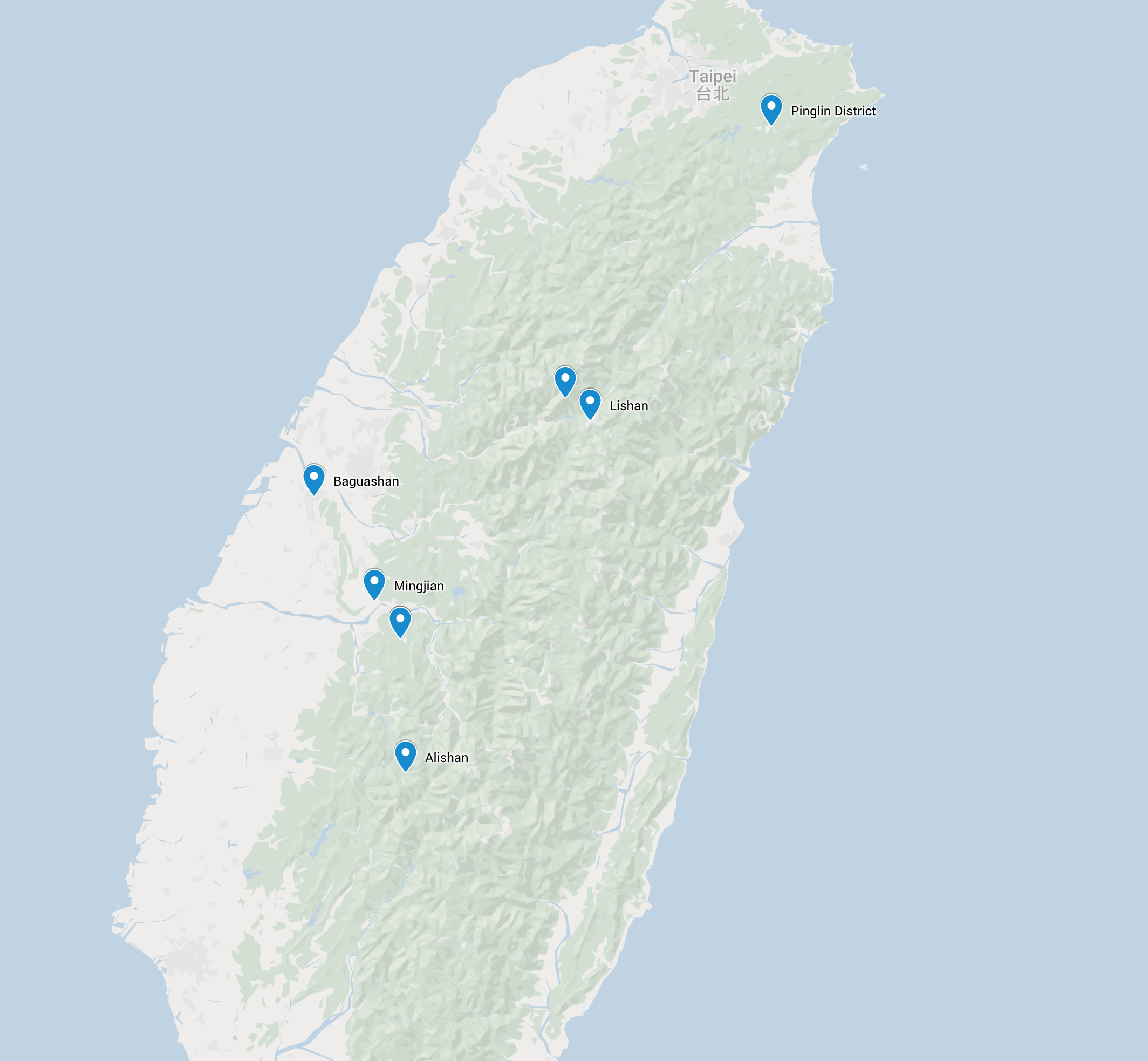
- Cui Feng (翠峰) is a place in Li Shan (梨山, pear mountain) (there's also a cultivar with that name)
- It's a high mountain oolong
- Menglin calls it the 'north light'
- Western (against Alishan 09 Qinxing): Nose slightly less sweet (still sweet though), a bit of hay and apricot kernels. Less juicy. Very filling tea, but not as sticky. Maiglöckchen, Akazienhonig. Alishan comes across as louder, juicier. As it cools, the qinxing juiciness comes forth. It has less of the typical osmanthus floweriness Alishan reveals when cooling down; instead it's a bit juicy-green, honeyed, some sweet vanilla.
- Blind Western (23 I 19): Green, juicy, with some roasting notes. A little bit of vanilla, maybe Maiglöckchen. Light and juicy, acacia honeyed; some sandalwood, structured and light. Yeah, it doesn't offer terribly much, but decent. Possibly a light Qingxin or a Shijichun.
- Blind Western (27 I 19): flower water nose. Green, very floral nose, reminds me of spring flowers at Habüehlstrasse. Maiglöckchen! Cup quite green, flower stalks but also flowers themselves. A little bit of light wood.
- Blind Western (6 II 19): Qingxin, vanilla and flower stalks. vanilla sweetness in the cup, and greenery. Pleasant, balanced. Alpenwiese; and Christmas time, somehow. Banana?
- Blind Western (21 II 19): Super nice smell, sweetish, round, fruity and a little bit of narcissus. Lots of baked peaches. Then later, clearly vanilla, also baked. Cup: Lighter style, very enjoyable though. Vanillated flowers. A little bit flower stalks, a little bit tea spice.
- Western (2 IV 19): Very baked in the nose, apricot tart with tarragon or orange thyme. In the cup, vanilla baked, some slight wood. It's actually not a very bright, light tea, but rather filling.
- Western (22 I 20): nose slightly baked, but quite tame (maybe because it's the rest of the tea?). A vibrancy in the cup; it's lost alot of its aroma, but retains it's power. Some spices, a green bitterness. Wow, I'm taken by this.
Song Lishan DP / w2t Osmanthus
- Western (2 II 20): Very vegetably, actually snap peas! Extremely green in cup and nose, but interesting. A bit of piss, too!
- Blind Western (2 II 20): I've had this before, snappy peas and piss. Shan Lin, clearly!
- Blind Western (3 II 20): yellowish, slightly bitter, green fresh vegetable nose. Piss, also. Snappy pea tea? Shan Lin; nope, it's w2t's osmanthus!
Song Shan Lin Xi DP
- Blind Western (2 II 20): this smells like food! Indian chicken curry? Same spiciness in the mouth! So this extreme style in the nose is really Song's style
- Western (2 II 20): It also has some piss in the nose, too. And the curry is quite sweet, also. Mouth also has some greenery; with the curry in the back.
Alishan 2016 Alte Machart
- Menglin says it's not roasted longer, but fermented longer.
- Western (against Alishan 09 and Cui Feng 15): wet leaves smell greener, juicier, more like Qingxin; same in the empty cup. Alishan 09 here really shines with deep candied oranges, so hopefully with time this one will turn out like that. Nose of 09 very Vanille-Gipfel, the other two greener again. Very lively cup, sweet vanilla-like, but also green juiciness. Green bell peppers? Not too dissimilar from Cui Feng, but this one has a bit more structure, and less sweetness. 09 actually quite bland in comparison, but draws long.
- Gong Fu (25 XII 18): Strong orchid smell on the lid. Slightly sweet cup, very good presence, a hint of sandalwood (might be the new 水差, though). Subsequent brewings show more greenery, woodiness.
- Blind Western (15 I 19): fresh juicy, vanilla-gipfel and cut flower stalks; tremendous succulence. Yeah, a bit Maiglöckchen, very very sippable.
Zheng Dong Ding
- The original Dong Ding
- 2018 Spring. Baked and green nose. Raisin bread. Woody and vanillated in the cup. A bit simple.
- Western Blind (22 I 20): Lots of dense fermented / demure notes. Demanding shit. Red wine vinegar. Cup in the same vein, but not as bad. A little bit of a burnt sharpness. A bit dusty, too.
- Western (22 I 20): Now demure is much tamer, still recognisable in the back, but predominantly Cresta / Skiraum, a bit of wax. Actually a very well rounded nose. As it chills a biting greenery shows briefly. Cup medium strength, a hint of bitterness. Long echo, which I'd say is the Dong Ding terroir. This is quite fascinating, actually. A tingling on the tip of the tongue. Not too extreme in taste. But a good, standard tea.
- Blind Western (30 I 20): deep Lipton nose, meaty accents. Aloeswood. Cup sticky, slightly acidic metallic. Woody, medium heavy. Didn't get it, lack of fruitiness could've told me.
- Western (1 II 20): very deep nose indeed, doesn't quite have the same brilliance as Alishan TGY, but still excellent. A bit of a beach house wood smell. Excellent cup, thick, tingling on the tip of the tongue. Not mineralic, actually, it's it's long, kind presence.
- Blind Western (1 II 20): very baked, pape marche; carton, baked croissants and edible paper. Some rainforesty fullness. It tastes alot like weetbix! Some fruity accents, but fresh fruit, not the usual candied fruits. Quite interesting, actually. As it chills, nose develops some hairspray note; and the cup retains it's liquid paper impression, spiked with golden raisins perhaps. This weetbix I had in Muzha TGY, this is not dissimilar from it; and this paper-quality I had in other TGYs, too. Cardboard note in other Song tea, so possibly this is one from them. More Jasmine than honey, so that's my bet. But I guessed completely wrong.
- Western (1 II 20): Again, weetbix and demure in the nose. Also some fruit, which I didn't pick up last time. Cup some pape marche, but also fruit, old fruit, apricot kernels, long tingling, actually. Not so sweet, but not dry either; a gong. As it cools more, the paper is well integrated, like a peach skin.
- Blind Western (2 II 20): full, sweetish, some warmed eucalyptus / spa quality. Bamboo wood! Cup round, every so smooth, slightly woody, long soft echo. Finally I got it!
- 2017 Guifei (貴妃). Greenery not apparent, instead fermented notes. Quite similar, but in the finish a very pleasant honey finish. Also not the most fascinating tea, though the gui fei adds a nice touch.
- Blind Western (17 I 20): deep, a bit of demure, and sulfite. Pleasant. Cup is good, not too aromatic, present, thick, but little taste. A tiny bit grassy. Actually not too fond of that one. Green cinnamon?
- Blind Western (1 II 20): very cool nose, complex. Fruity, peaches, very ripe, wood, complex chocolate. Marillen! Cup is rich, fruity, a little bit brickstone. Not very sweet actually, echo of fruits. Thought it might be Zheng Dong Ding, but then though the Dong Ding Xi was not really there, and mistook it for TGY's milkiness.
- Blind Western (2 II 20): tamer nose, more Fimo or wet clay. Quite round in cup, a bit salty actually. A bit flat, too, qingxin flow. Narciss, succulence; little body, metallic tinge. Got it wrong, thinking it might be Jubiläums-Qingxin.
- Blind Western (2 II 20): malty, orange-y; the idea of vinegar. Chocolate bacon. Cup malty too, but fully, chocolate accents. Thought it'd be Nantou Dark, so I missed it again. Meaty chocolate could give it away.
Oriental Beauty Toufen 2018
- Blind Western (18 I 20): dark and forest-y, very familiar taste, darjeeling-like, in fact. Muscat flower.
- Blind Western (27 I 20): this smells alot like the first oolong I tried, so virile, strong. I think I had something like this in Amsterdam. Fermented plums. Cup strong, leather curing. It doesn't taste like one of Menglin's teas. Amsterdam wood. Actually, it's a darjeeling taste; so maybe it's OB? Yep, it is, the muscat flower taste gave it away. No fruit whatsover.
- Blind Western (2 II 20): Intense, eucalyptus again, but much more sharp. Demure? Sharp barn! Cup similar. Fermented aloeswood. The heaviness, lack of fruit gave it away!
<color #A9A9A9>Nantou Dark Spring 2017 from Song Tea</color>
- Started with green oolong, then *multiple rounds of roasts*. In conclusion, having tasted this quite alot, it is mostly the roast that you can taste, which is pleasant; but little to show from the cultivar. Menglin calls this a 'hergerichteter Tee'.
- This one I find quite cool, and could also be cool for ageing. Not sure how much the Qin Xing is detectable, it seems to be more of a study in roasting.
- Western (30 XII 18): Tiny leaves, that hardly unfolded. Intense smell of soy sauce and warmed malt. Deep nose, red clay; fimo? Sweet cup, dried fruits and woodsy, almost smoky / tobacco notes.
- Blind Western (23 I 19): fruity, thorough roast; lots of leather. Some wet clay. A: intense fucker, leather and lots of dried fruits, very big and tasty. Malt sugar in the back. Heavily roasted, dense, non-fruity oolong.
- Blind Western (28 I 19): slightly fruity, slightly dark. leathery nose, quite pleasant. Dense. Indeed, leather in the nose. Continues in mouth, leathery (but lighter, fresh leather), some perfumed notes, too. Roasted clearly. This time I thought it was a bit one-dimensional, has it lost through the transport?
- Western (2 II 20): Quite dark nose, some cocoa and maltiness. Cup is very nice, heavy, malt sugar, lightly tanned leather.
- Blind Western (2 II 20): malty fucker. Cup is oh so nice, warm cocoa. Gave it away, DD Guifei possibly more fruity.
<color #A9A9A9>Alishan Guo Xian from Sazentea</color>
- Blend of Qing Xin and Jin Xuan
- Western (17 I 19) (against Cui Feng): green, cooked edamame, vanilla-Gipfel. Juicy, slightly fruity cup; the blending is actually quite smart. Lots of green Qingxin, very akin to Song's Dragon Pheonix. Little off-notes, but I'm not fond of this style of tea. (Blended it with the rest of Song's Dragon Phoenix.)
<color #A9A9A9>Baozhong Qingxin, Pinglin (Spring 2018) from Shui Tang</color>
- baozhong refers to the rolling into strip shape
- I find this tea incredibly more-ish!
- **Western (XI 2018): ** Sweet, narcissus, some very slight minerality, super juicy! Nose is amazing, so juicy; cut flower stalks.
<color #A9A9A9>Jiayang Organic “Alluvial Devil” High Mountain Oolong Tea (Spring 2018) from Taiwan Oolong</color>
- Western (in comparison with STs Qingxin) (XI 2018): Quite an exciting cup, strawberry marmelade and tonka. Nose is overcooked carrots. A bit of that makes it into the cup, too, but otherwise it has a similar, though tamer, juiciness as STs. A bit boring.
- Gong Fu: Same roast carrot stew note, more substantiated
<color #A9A9A9>Dragon Phoenix Clear Heart Spring 2018 from Song Tea</color>
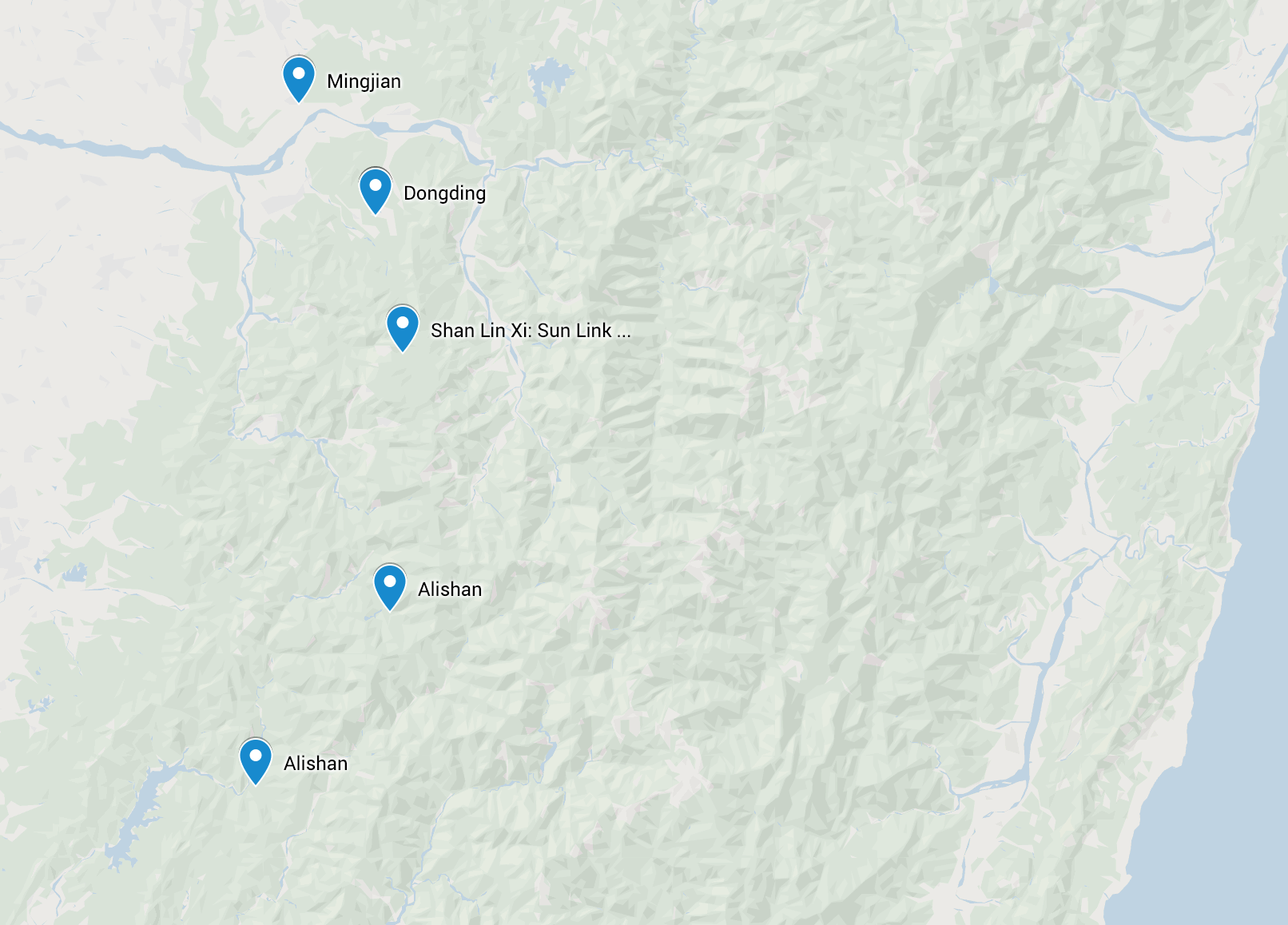
- From Shan Lin Xi (杉林溪) in Nantou, 1700m, lightly oxidized, lightly baked in San Francisco.
- Western (30 XII 18) (compared against Alishan Alte Machart and Nantou Dark): wet leaves smell very green, vanilla-y and chestnut milk. Empty cup mirrors that quite well, not as green for the Dragon Pheonix one. Alishan slightly sweet, a bit woody and maritime. This one retains a greeness in the cup, some dry vanilla. Quite velvety, not zingy green. Nose has a bit of carrot stew.
- Website mentions edamame as a tasting note, it's a good word for the green-ness I find here.
- I guess it's a good tea in terms of production and clarity of flavour; but I'm not so fond of the green-silkiness of it.
- in subsequent GFC it becomes a bit more approachable and round.
- Annoying green, cooked stew (23 I 19)
- Blind Western (6 II 19): green, a bit vegetable stew. extremely green, actually. overcooked carrots. very milky aroma, green bitterness shining through. vanillated, dried carrots. Not a fan of green oolongs, even though the milky-ness here is surprising. I think I blended in something else here, but this one is not too bad.
- Blind Western (27 I 20): very green and light, a bit vanilla fudge. This must be tea master's Alishan. Cup is actually quite nice while it's hot, a bit grassy, good sweetness. Actually, it is not bad at all, so maybe it's a lighter style TGY, too? It does have some milky hints. It was Song teas Qingxin.