This is an old revision of the document!
Table of Contents
- Not thrown, formed by hand
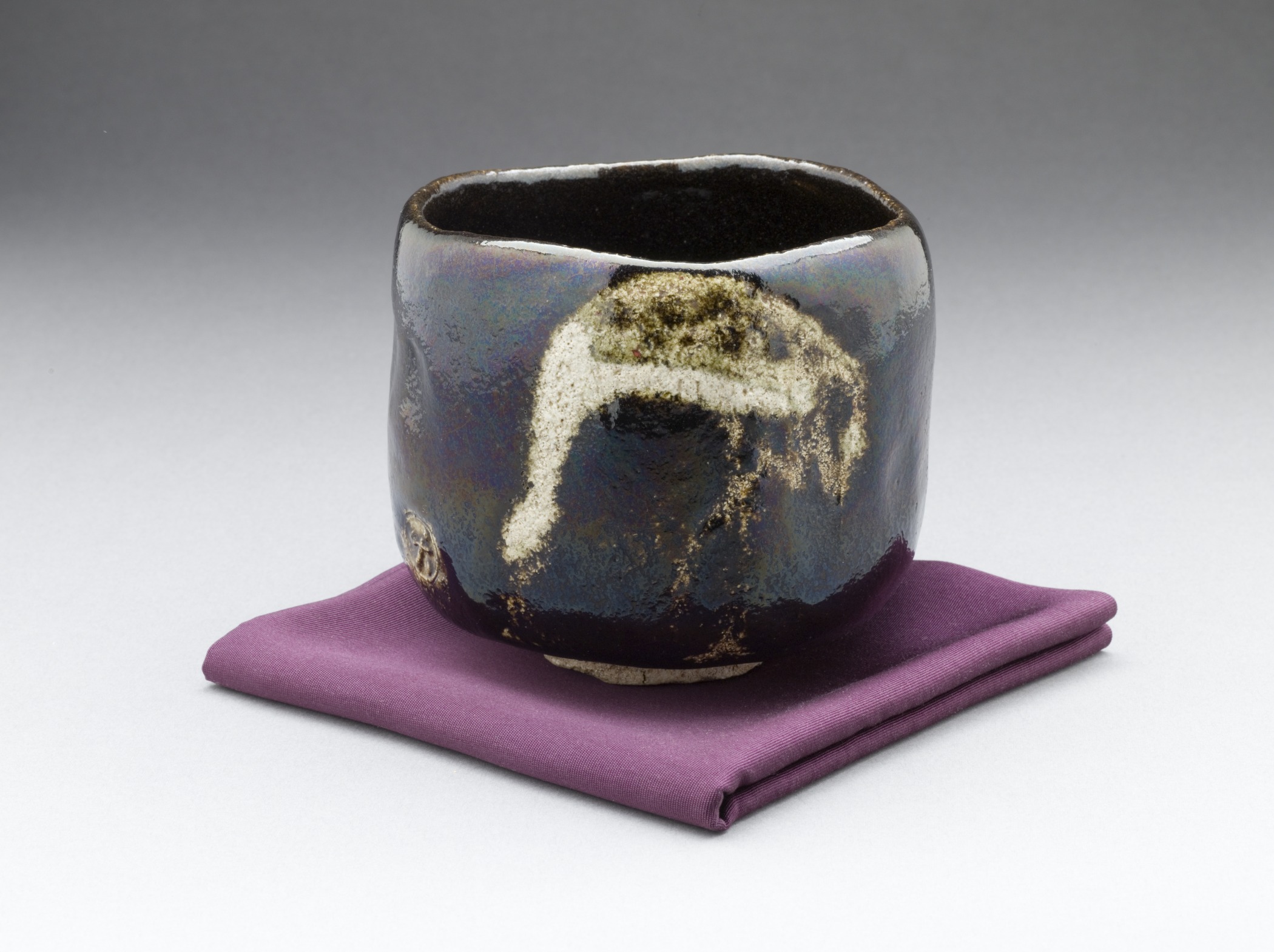
- 赤楽 fired at 700-800°C, 黒楽 at over 1000.
- 赤: Not a flaring red, but earthy.
- 黒: At the times of 長次郎(ちょうじろう)it was brown black, only when firing temperatures rose later they became fully black.
- Ullrich writes that 利休 used 赤楽 for the 2 畳 room, which was already dark, the wands being blackened and all, and using 黒楽 would've been too much. He used 黒楽 in the 4.5 畳 room.
- 3 colours of 侘び: the green of the 畳, the red of the 茶碗 and the black of the walls of 待庵.
長次郎(ちょうじろう) Ware
- 1580 mention of red 楽, seems to be the earlier type.
- 1586 first time mention of a Soeki-shape 茶碗.
- Possibly a whole bunch of different potters in the family made pots under this name.
- Example: 無一物(む いち もつ). Famed because it's not trying to express any inclination of the maker, it just sits in the room quietly.

- Famously, 大黒(おお ぐろ)(picture from Ullrich)

Jokei (II)
- It is said that 利休 liked 長次郎(ちょうじろう)'s wares, and his son, Doan, Jokei's.
Nonko (III)
- Up to then, the 黒楽 had a “dried” glaze and a brown-black colour.
了入
- 了入(りょうにゅ)IX (1756-1834) was very prolific, invented cutting method (link), regarded as one of the greatest.