This is an old revision of the document!
Table of Contents
Personal to-dos
- Prepare the 大炉 this year!
Tea Rites
- Winter solstice is on the 21 / 23 XII, so astrologically, it is already spring and the days get longer. Yet, the great cold,
大寒 , usually around the 22 I, is still ahead. - On New Year's Day, 井華水(せいか すい)or 若水(わか みず), which is water drawn between 0200 and 0400 (the time of the 虎) and is considered especially pure, is drawn. This then is used to make 大福茶(おおぶくちゃ), which has symbolism that ties it to happiness and long life and is a mix of 煎茶, 昆布 and dried plum. 小山園 and 上林 also have 抹茶 with that name.
- If there's fresh snow, boil it in the kettle. ML explained that the Chinese collect the snow from the pines for this, feeling particularly poetic while doing so.
- Then there's 初釜, of course!
Symbols and toys
- Often you see 真台子 this time of the year. I prefer to do the 台子 点前 in summer, when the cool movements seem more fitting for me, so I prefer the 紹鴎棚. In either case, you can decorate the 台子 with the papers like in 名水!
- Apart from that, the 誰が袖棚 is not a bad idea, through the association of 着物袖 and 梅 scent.
- Good symbols are
- 松 (for long life, such as 老松, 唐松)
- 曙 (like the 淡々斎好み red 棗)
- Willows tied into a circle
- 島台, red and white, the Seven Gods of Fortune, who live on 蓬莱(ほらい)mountain, and come with a 宝船(たからぶね), a treasure ship.
- 寒月(かんげつ), the cold, indifferent moon that drains warmth of all.
- 初草(はつ くさ)is a 名物 茶入 that is completely plain brown. It reminds us of the brown grass in the melting snow, that bears the promise of rebirth. See 侘び. KM said (I 24) it would be better to use 雪間草(雪 ま 草).
- In the same vein, one student used 早蕨(さわらび)in I 24, which is some rolled up, edible fern that represents spring.
- 雲海(うんかい)for a 茶碗, with the clouds that bring rain and thus life, and the sea that brings forth all. Because the bowl is something that carries the present of the tea, it is quite suitable.
- Most of it is from Ulrich
➡️ I guess anything with 初 is fine. KM suggested I use 初笑い, for example.
Poems
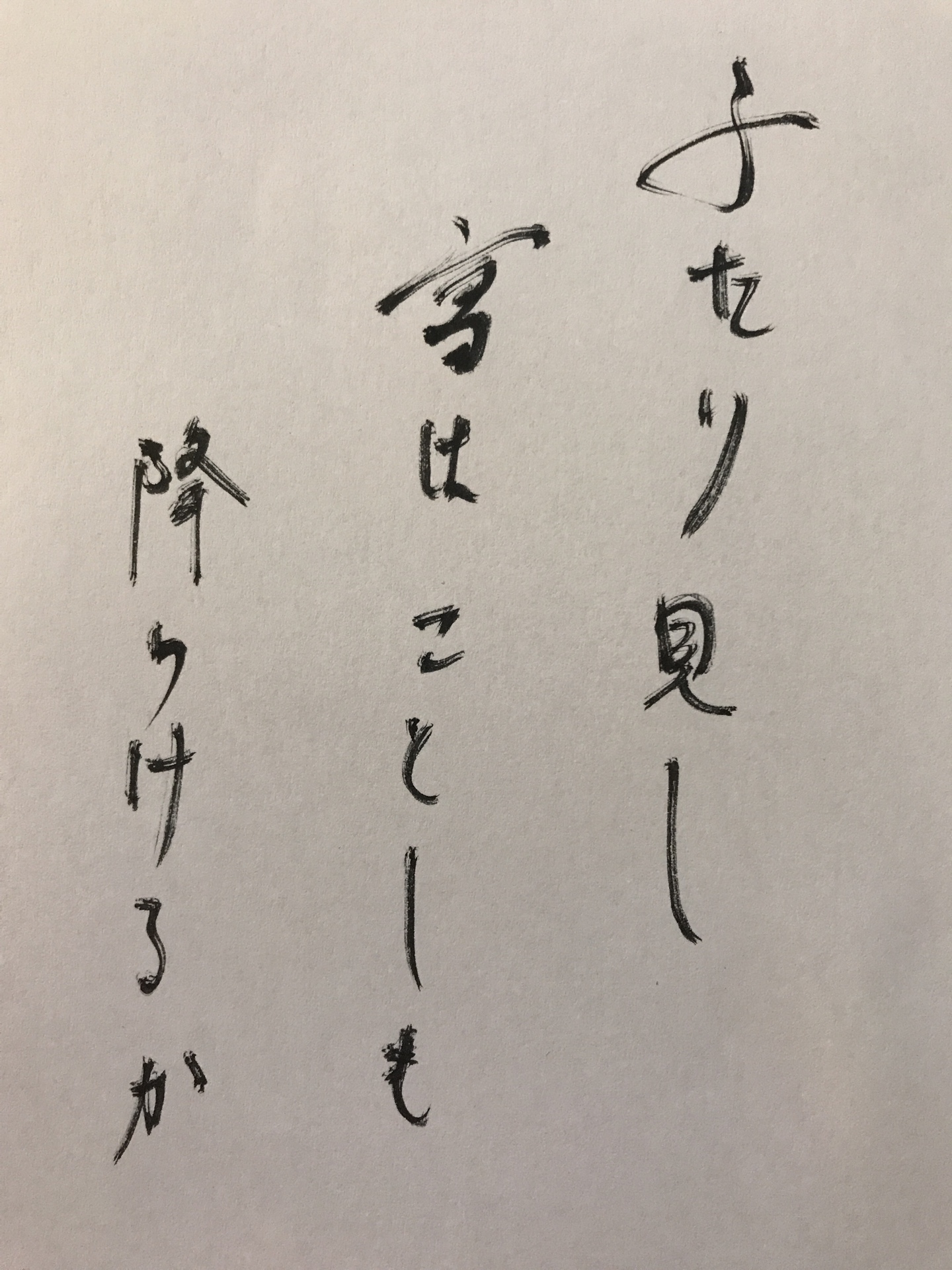
| ふたり見し 雪はことしも 降りけるか | futari mishi yuki wa kotoshi mo furikeru ka | The snow we two once viewed together - has it fallen again this year? |
- Bashō
和菓子
- 主菓子 of course is 花弁餅!

- 淡交テキスト recommends these
- 干菓子 could be 若松 (young pine) sweets. Young pine trees symbolize the hopes for the new year. For these sweets, the impression of a pine branch is stamped on soft rice crackers, which are then stacked, with miso placed between each layer.
- No-shimusubi (gift knot) sweets. At New Year's, gifts of money are often wrapped in strips of paper. These sweets, similar to ribbon candy served in the West, are made of strips of sugar cake that have been dyed red and white, the traditional congratulatory colors in Japan, and tied in knots before they harden.

花
- Mittwer suggests narcissus in bronze:

- 千 recommends Camellia bud and ornamental wild greenery in a two-tiered bar bamboo container with a gold-on-black lacquer design tortoises and waves on the inside:
