Table of Contents
お菓子
- Before we speak about anything else, we need to make 餡.
- Finally, a brief overview over ingredients used in 和菓子.
📝 My private notes from the 京都 course.
- Taste:
- Most say that sweets for tea should only be slightly sweet and devoid of flavour as not to interfere with the taste of tea. However, in a 茶事 this doesn't really hold, since you have the 中立 and the つくばい between the sweets and the tea.
- Still, tea sweets will have less flamboyant tastes to suit the mood of the setting better, while “regular” sweets can up that a little bit.
余情 :- It's a good principle for tea: It means being not too obvious. So don't just depict a flower directly, but rather lean towards the abstract so that the 御銘 can then complete the image in the mind of the beholder.
- 和菓子 touch all 5 senses: The ear by the 御銘 that is spoken when the guests ask for it.
My principles
- Start with the absolute vanilla flavour
- Before starting, research and note recipes, ideally from reference books
- Before actually starting, write down recipe and steps on paper
- Keep all variables fixed and always do the recipes twice (with one variable different)
- While working, clean as you go. If you put down something and what you're doing can wait a bit, clean.
- Don't nibble. Taste often, but if things need to be thrown away, throw them away. If you behave like a trash bin, you'll look like one, and it's going to do wonders for your 正座.
Families
My seven families don't align perfectly with how to chose 7 sweets for 真之行 (see presentation) nor with 仲實, but I found them most useful classification so far.
1. 蒸し物 (steamed)
This maillard-free way of cooking is quite suited to the subtle tea mood.
- 饅頭 (including the yams-based
藷蕷 饅頭)
2. 焼き物 (baked)
3. 伸し物 (stretched)
4. 練り物 (kneaded)
5. 打ち物 (pressed)
Like
6. 流し物 (jellied)
Very popular in summer. If we're considering the gelling agent, we have:
- The sorry 水饅頭
7. 飴
Which technically is hard sugar, but I'm using this category also for non-pressed sugar-based sweets like 琥珀糖, 雲平 and 洲浜.
Seasons
Probably every sweet could be changed to match every season if shape and name are adapted, but if we're staying the the classic use of sweets, we could end up with this:
0. Evergreens
These are recipes that really don't seem to have a prefered season and can be adapted to match any.
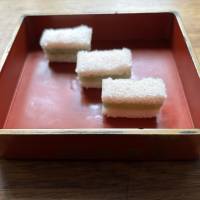 かるかん, a 蒸し物 using yams.
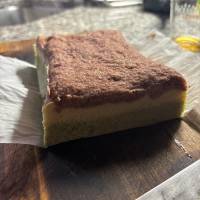 浮島, a 蒸し物. Sometimes it includes some candied black beans.
 桃山, a baked 黄身餡 sweet that can be shaped into beans, bells and chrysanthemums.
 打ち物 are just pressed sugar sweets used in all shapes and flavours.
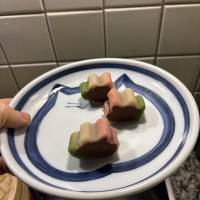 Simple to make, こなし-based alrounder. The colours change according to the season.
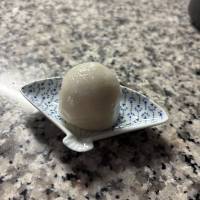 Steamed buns with yams (
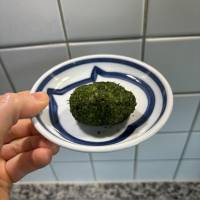

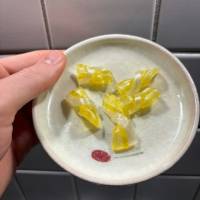
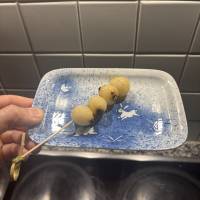
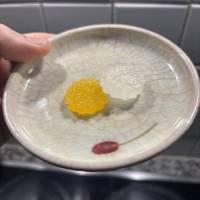
1. Winter
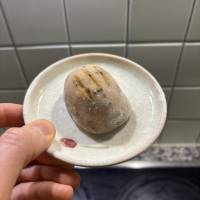
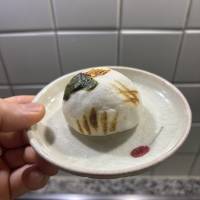 A plain 薯蕷饅頭 that's coloured and brandied, making it a 織部饅頭.
 ∃ two kinds of 柚べし: 味噌 in a cured citron, or a 求肥 with walnuts and 醤油.
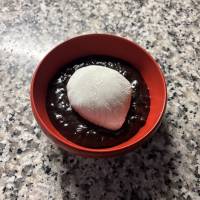 ぜんざい, a sweet soup with red beans and 餅. It's often served for 炉開き.


 福寿草 , a 茶巾絞り

No photos yet, but also:
- 蕎麦板, a buckwheat biscuit that I really like!
- 粉雪, normally a 道明寺粉-based sweet that you can also make with baby food!
2. Spring
 My 発音, which is a

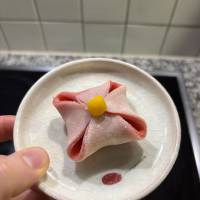
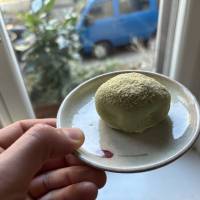 うぐいす餅, a plain good ol' もち tossed in green soybean flour.
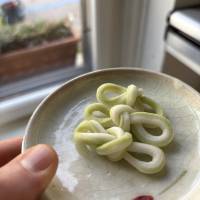
 The 茶巾絞り 「水鳥」, for which I like to use 黄身餡 as 中餡.
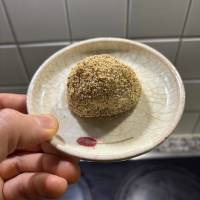 The messy, but tasty affair that is the poppy seed 餅
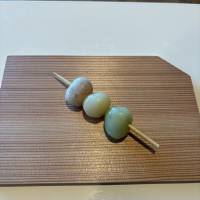 The iconic 花見団子, where the use of 蓬 actually makes sense.
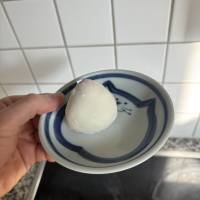 The literal いちご大福餅.
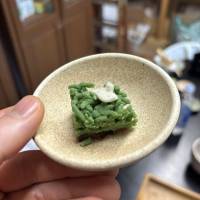 Not originally my idea, but because I only had the 千鳥 cookie cutter, we ended up with the 「雀の分」.
 My creation「吉野窓」, which represents the excitement of viewing the cherry blossoms!
 The starch-based canvas for black syrup that is the わらび餅
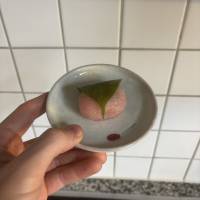


3. Summer

 柏もち, the oak leaf-wrapped 団子-dough variation.


 豆かん, the quintessential 寒天 jelly.
 ずんだ, a green bean-based あん often enjoyed on simple もち.
 Summer-leaning, but manifold: 錦玉羹
4. Autumn
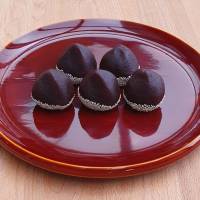
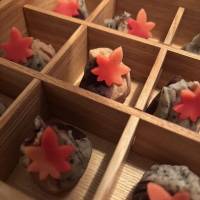
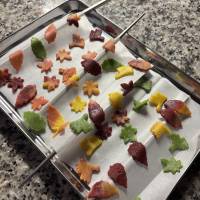 吹寄せ, autumn leaves and whatnot from 雲平 dough, with some pressed sugar
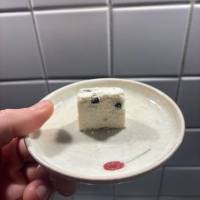 A pressed sugar sweet with 大徳寺納豆.
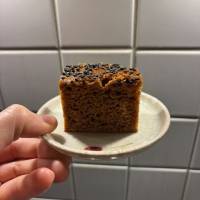 がんづき, a brown sugar bread.
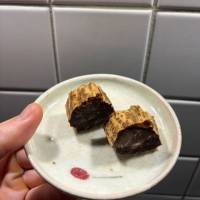
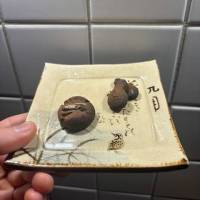 そばぼろう, a fall-flavoured cookie.
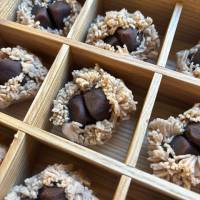 奥山, a 金団 that lets the 中あん peek out to make it look like a chestnut.
洋菓子
Some non-Japanese sweets that I think might be quite suitable:
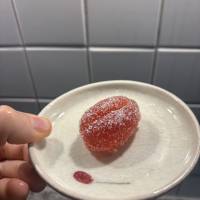 Pâte de fruit, a pectin-gellied fruit candy.
 Barfi, an Indian milk-based sweet.
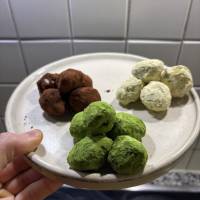 Truffles, which I like flavour with olive oil.
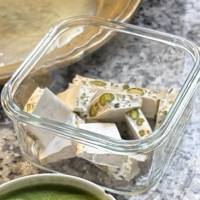 Torrone di Beneveto, which I like for February, but really is a 干菓子 that works always.
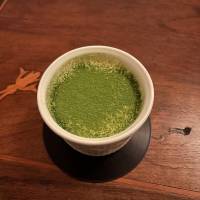 Soufflé Mitterand, an absinthe-flavoured ice cream
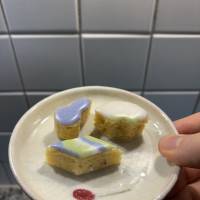 Calisson d'Aix, a Provence sweet with a candied fruit dough
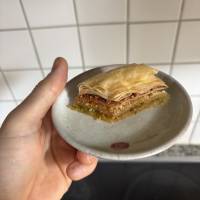 Baklava, which you can fill with buffalo milk and make look a bit like a ひしもち!
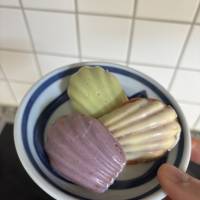 Madeleine, a small butter-cake in the shape of a shell that can be chocolate coated.
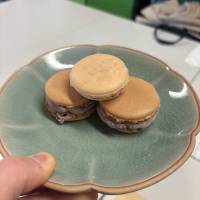 The wonderfully fluffy soft shell that is the macaron.
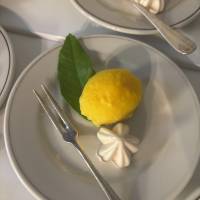 Cedric Grolet's lemon-shaped dessert, a fluffy ganache in a fruit-shaped shell
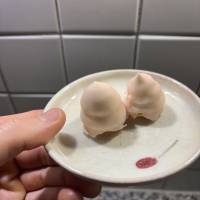 Schaumkuss, an Italian meringue on a wafer covered in chocolate
Meringue, which I'm flavouring with absinthe for more 🇨🇭🇨🇭🇨🇭
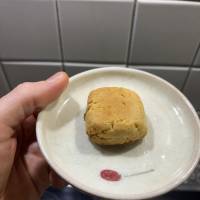 鳳梨酥, a Taiwanese pineapple jam in shortbread
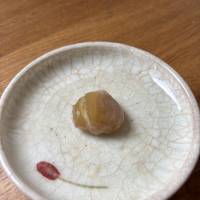 Marrons glacés, which thanks to the glaze make for excellent 干菓子!
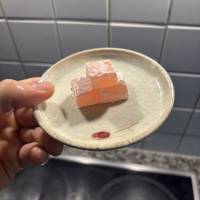 راحة الحلقوم, which is interesting in it's similarities to 葛!
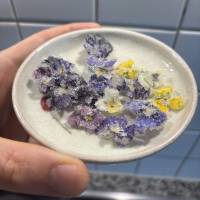 Candied violets (or flowers in general).
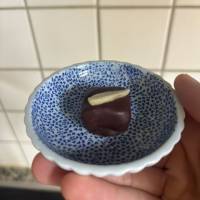 Marzipan, the European 練り切り!
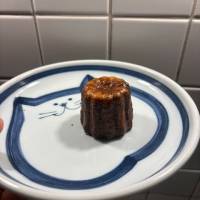 The final boss of French pastry, the canelé bordelais.
Calendars
➡️ I have my own sweets calendar; but here we also have a more professional view.
Background
お菓子屋
➡️ I've moved famous sweets and sweets stores to their own page.
Presentation
➡️ Rules governing the arrangement during tea also found their own page.
腰掛け
- You can serve difficult to eat sweets such as a 竹流し in the 腰掛け, or when you want the guests to enjoy the atmosphere.
- In that case, add the 黒文字 on the far side of the tray akin to the 利休箸. The guests take them into their 懐紙.
- You can use lidded containers or a 菓子鉢, but maybe the 縁高 is a bit odd here.
- The host brings out the sweets to the guests once they are sitting.
- If there's some refuse (like bamboo leaves), you could instruct the guests to leave it in the container.
- The guests leave the container to the 下座 of the 煙草盆 stacked upon the 円座.
Dialogue
- When bringing your own sweets, and they are used in the 点前, the dialogue changes a bit: The host can either prevent the silliness of having to ask about the sweets by saying 'thanks for bringing those sweets' before the conversation moves to asking about the tea; or the guest can say 'thank you for using my sweets' after having inquired about the tea (UH19).
- For me, it's: 「
前席 では、かずかずのお菓子をどうもありがとうございました」. If it get's more complicated, I stumble over my words. - If asked about the ごせい and you've made the sweets, it's okay to say 「手作り」or 「
自作 」.
Resources
- There are 4 main books that I use:
- 仲實's 和菓子. Probably the Bocuse of Japanese sweets. More professional-oriented, but excellent recipes. Build around families.
- 金塚's 私の和菓子帳. Build around seasons. Recipes are sometimes a bit iffy, but a great calendar. Not too tea focussed.
- 清真's 本格和菓子. She's a 学校園 teacher, so her recipes are very tea-focused. Somewhat childish, probably simplified a bit.
- The 淡交テキスト series (TT): Great recipes, very seasonal, very tea related.
- In my drive, I have also an excellent mini-book by UH!
Org
- For pageImage, I had to fix a bug so that it finds the first image of a page.
- Every actual recipe now gets the
{{tag>...}}-snippet somewhere on its page, which should at least contain:- Family (from
mushimono yakimono noshimono nerimono uchimono nagashimono ame) - Season (from
winter spring summer fall evergreen)
- Because
topicuses the title on the page, each sweet needs to say it's name on the page again. - To fold such a list in, use:
++++ Title|
{{topic>tag&table&header&nofirsthl&nouser&image}}